
Fruitsies - Pet Friends
TutoTOONSEducational
4.0310.00 Reviews
- Version
- 1.9.502
- Installs
- 10.00M
- Age Rating
- Everyone
Screenshots
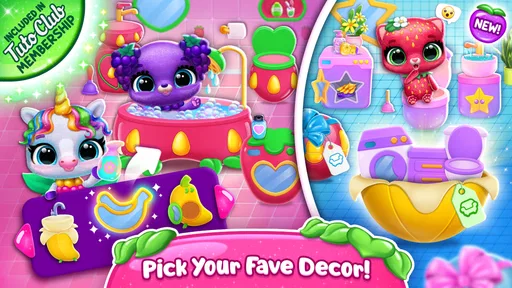
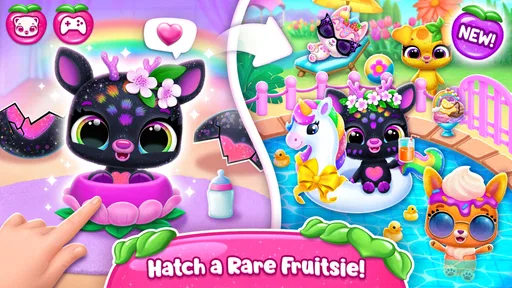
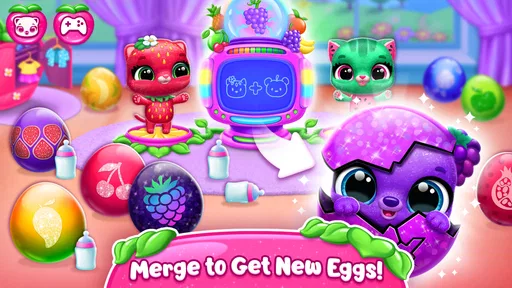
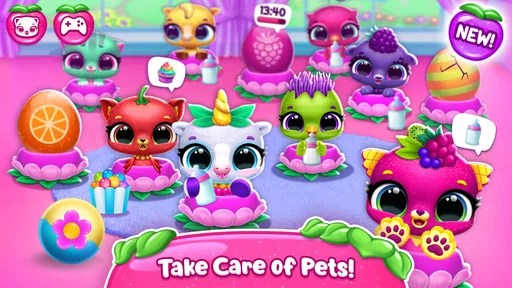
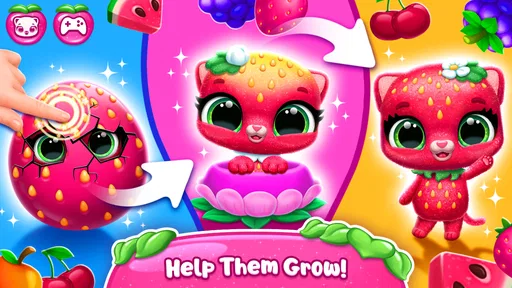
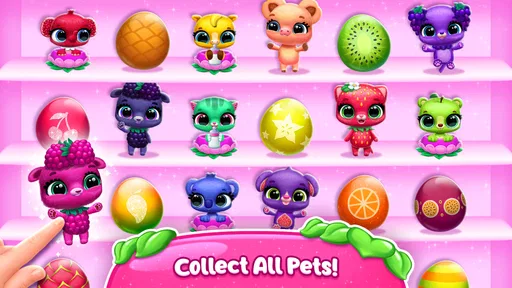

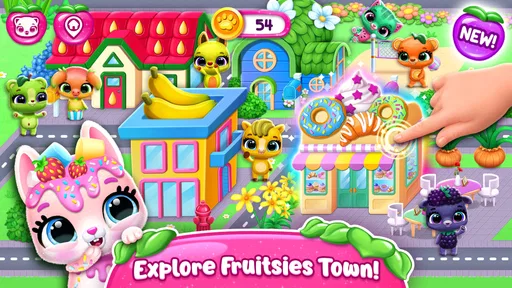
Our Review of Fruitsies - Pet Friends
 Analysis by Appyee
My first impression of Fruitsies - Pet Friends was that it understands its audience immediately. This is a gentle educational game from TutoTOONS built around cute virtual animals, simple interactions, and a bright setting that feels inviting rather than demanding. Instead of asking a child to master complicated controls or follow a long story, it creates a small world where looking after pets, discovering new characters, and spending time with them becomes the main activity.
I can see why it has reached over 10 million installs and an average rating of 4.0 from around 14 thousand ratings. Those figures suggest broad appeal, but they also tell me that this is best judged as a relaxed children’s game rather than a deep simulation. It is free to start, rated Everyone, and available for devices running Android 7.0 or later. That combination makes it easy for families to try, although the in-app purchases, which range from $1.49 to $159.99 per item, deserve attention before a child plays independently.
A soft first impression that knows what it wants to be
The game’s central idea is easy to understand: discover virtual pets, hatch eggs, play with the animals, and enjoy a cheerful routine around them. I like that the concept does not bury the player under instructions. A young child can recognize the purpose of the game almost instantly, while an adult can explain the basic loop without needing to study a manual.
That simplicity is also the first important trade-off. If you are searching for a demanding educational title with structured lessons in reading, mathematics, science, or problem-solving, this will probably feel too light. Its educational value comes more from guided interaction, recognition, sequencing, and gentle responsibility than from formal teaching. I would describe it as a playful learning environment, not a digital workbook.
In everyday use, I think it fits especially well into short sessions. A child waiting at a restaurant, relaxing after school, or sitting beside a parent during a quiet afternoon can open the game and engage with the pets without needing a long uninterrupted commitment. The low-pressure design is useful when the goal is calm entertainment, but it may not hold the attention of children who want fast action, competitive goals, or a clear win condition.
The free entry point is convenient, yet I would set up purchase protections before handing over the device. A child may understand that the game is free while still being tempted by optional items or progress-related purchases. The wide purchase range means the financial side should be treated as part of the setup, not as an afterthought. I would let the child explore first and decide together which, if any, extras are genuinely worthwhile.
The visual language makes the setting easy to read
The art direction does much of the teaching. Fruitsies uses a friendly, rounded look that makes the pets appear approachable and the world easy to scan. Shapes, colors, and expressive animal designs carry meaning quickly. For a young player, that matters: the screen does not need to be explained in abstract terms when the characters themselves communicate where attention should go.
I found the setting more effective because it stays coherent. The virtual pets are not presented as isolated decorations; they give the game its emotional center. Hatching an egg has a sense of anticipation, and caring for the resulting animal gives the player a reason to return. Even when the actions are simple, the visual presentation helps them feel like part of the same small world.
One useful detail is the way the game can support conversation between a child and an adult. Rather than simply watching a child tap through menus, a parent can ask which pet appeared, what it needs, or what the child expects to happen next. That turns the colorful presentation into an opportunity for vocabulary, prediction, and storytelling. The game does not have to carry the entire educational experience by itself; its visual world gives adults something concrete to discuss.
The cute style will not suit everyone. Some older children may find the characters too young, particularly if they already prefer adventure games, building games, or more detailed simulations. I would also avoid presenting it as a replacement for imaginative play with real toys. Its strength is that it gives a child a responsive digital space to explore, not that it reproduces every benefit of physical play.
Another practical point is screen readability. A clean, colorful design is helpful on a phone, where small controls can otherwise become frustrating. I would still encourage a parent to watch the first session, especially on a smaller screen. If a child is unsure where to tap, the experience can shift from independent discovery to repeated requests for help. Once the basic visual language is understood, however, the game’s approachable appearance should make returning easier.
Sound and rhythm keep the mood gentle
The mood depends on more than pictures. A pet game needs to feel warm enough that caring for the characters is pleasant, and the sound design works as part of that emotional invitation. The overall impression is soft and playful rather than tense. That is important for the intended audience because there is no need for dramatic pressure to make a virtual pet feel engaging.
I prefer this kind of rhythm for younger players who become overwhelmed by constant alerts, rapid challenges, or competitive sound effects. The experience leaves room for a child to pause, look around, and decide what to do next. That slower pace also makes it suitable for a short wind-down period, although I would not use any game immediately before bedtime without checking whether the individual child becomes more stimulated by screen use.
The rhythm is closely tied to the game’s limited mechanical ambition. When the player is mostly discovering pets and interacting with them, a calm presentation feels appropriate. If the same sound and pacing were attached to a complex strategy game, they might feel flat; here, they support the idea of a small, safe routine. The game is asking for attention, but not demanding constant performance.
Parents should think about sound in practical terms. A child may enjoy the atmosphere more with audio enabled, but a shared space may call for a lower volume or silent play. If the child loses interest without sound, that is a useful sign that the audio is doing a lot of the engagement work. If the child continues exploring quietly, the visual design is carrying its share of the experience.
Simple mechanics are a good match for the audience
The mechanics fit the presentation because they are built around discovery and pet interaction rather than complicated systems. Hatching eggs gives the player a clear moment of curiosity, while playing with the animals provides an immediate reason to interact. I like this pairing: one activity creates anticipation, and the other turns that anticipation into an ongoing relationship with the pet.
This structure is particularly useful for children who are still learning that actions can lead to outcomes. The child can make a choice, observe what happens, and then decide whether to continue. That may sound modest compared with a traditional educational app, but it is a more natural way to introduce cause and effect to a young player who is motivated by characters rather than exercises.
My main caution is repetition. A relaxed pet loop can be comforting, but it can also become predictable if a child wants increasingly difficult goals. I would use the game as one option in a wider rotation rather than expecting it to provide all-day entertainment. Short, purposeful sessions are likely to show its strengths more clearly than leaving it open for hours.
There is also a useful distinction between independent play and shared play. A child who can already navigate familiar mobile interfaces may be able to explore without much assistance. A younger child may benefit from a parent sitting nearby during the first few sessions, not because the concept is difficult, but because the adult can model patience and help connect the virtual actions with real-world ideas such as caring, waiting, choosing, and noticing changes.
If you want to make the game more educational without forcing it, try giving the child a small observation task. Ask them to remember which pet they met first, describe its appearance, or predict what might come from the next egg. These prompts add memory and language practice while preserving the game’s relaxed mood. The important thing is not to turn every session into a test; the pets should remain the source of motivation.
Where it fits beside other children’s games
Compared with an academic learning app, Fruitsies is more character-led and less lesson-led. A mathematics or phonics app is the better choice when a parent wants measurable practice in a specific school skill. Here, the learning is woven into interaction and routine, so the benefits are broader but less targeted.
Compared with a traditional virtual-pet game, it feels more suitable for discovery because the egg-hatching idea gives the player a reason to explore new animals. At the same time, anyone expecting a detailed life simulator should lower their expectations. The appeal is the accessible fantasy of virtual companionship, not a highly complex model of animal care.
Compared with action games, it is much less stressful and more forgiving. There is no need to react quickly or compete with other players to enjoy the basic premise. That makes it a sensible choice for a child who prefers calm activities, but a poor choice for someone who measures fun through challenge, speed, or mastery.
The developer, TutoTOONS, has positioned the game in a space where presentation and accessibility matter as much as depth. The current version is 1.9.502, and the game was released on August 10, 2022. Those details are useful when checking device compatibility and deciding whether an older phone or tablet is suitable, but the more important question is whether the child enjoys gentle pet-centered play.
Who will enjoy it, and who should skip it?
I would recommend it to families looking for a colorful first virtual-pet experience, especially when the child enjoys animals, collecting discoveries, and imaginative routines. It can also work well as a shared activity between an adult and a child because the world gives you easy conversation starters without requiring the adult to take over.
I would be more cautious if your child becomes frustrated by repetition or needs a strong sense of progression. The game’s charm depends on liking the atmosphere and the pets themselves. If that emotional connection is missing, the simple interactions may feel thin very quickly.
I would also skip it as the main choice for structured learning. It can complement educational routines, but it should not be mistaken for a focused reading, language, or numeracy course. For those goals, a dedicated learning app will usually offer clearer exercises and more direct feedback.
Finally, families who want a completely purchase-free environment should review the device’s payment settings before installation. The game is free to begin, but optional purchases can change how comfortable it feels for unsupervised play. That is not a reason to reject it automatically; it is a reason to establish boundaries first.
My atmosphere verdict after looking beyond the cuteness
What stays with me is the consistency between the art, sound, setting, and mechanics. The cute animals are not just decoration, the gentle rhythm is not accidental, and the simple interactions do not pretend to be a demanding simulation. Everything points toward a calm, accessible experience built around discovering and enjoying virtual companions.
That coherence is the game’s biggest strength. When a child wants a quiet activity, the presentation supports the mechanics instead of fighting them. The player can hatch an egg, meet a pet, and spend time in the world without being pushed into complicated goals. For a young audience, that clarity is valuable.
Its limitations are equally clear. The educational side is informal, repetition may reduce long-term appeal for older children, and the optional purchases require adult supervision. I would not choose it for academic practice, competitive play, or deep simulation. I would choose it when the priority is a friendly, low-pressure game that gives a child room to explore at their own pace.
Overall, Fruitsies - Pet Friends is a good fit for families who value mood, accessibility, and virtual-pet discovery more than complexity. I would introduce it during a shared first session, adjust purchase controls, and encourage the child to talk about the pets rather than simply tapping through activities. Used that way, it becomes more than a colorful distraction: it is a small, coherent play space with enough warmth to invite repeated visits, while remaining honest about its modest depth.
Verdict
Strengths of Fruitsies - Pet Friends
- Cute pet characters appeal to younger children.
- Simple controls make it easy for beginners to play.
- Short activities are suitable for quick play sessions.
- Bright visuals are colorful and easy to understand.
- Pet care tasks encourage gentle, nurturing play.
Limitations of Fruitsies - Pet Friends
- Some content may feel repetitive after extended play.
- Younger children may need help with reading instructions.
- Progression can seem slow without frequent play.
- The game may take considerable storage on older devices.
- Limited challenge may not satisfy older or experienced players.
Other Releases by TutoTOONS
View All
Fluvsies - A Fluff to Luv
Educational4.1

Sweet Baby Girl Cleanup 5
Educational3.8

Smolsies - My Cute Pet House
Educational4.1

Bunnsies - Happy Pet World
Educational4.0
Similar Picks in This Category
View All
Little Panda Policeman
BabyBus4.0

Monster Trucks Game for Kids 2
Raz Games4.1

Little Panda's Chinese Recipes
BabyBus4.4

Little Panda's Restaurant
BabyBus4.4

Little Panda's Ice Cream Games
BabyBus4.3

Baby Panda Care
BabyBus3.8
Frequently Asked Questions
What is Fruitsies - Pet Friends?
Fruitsies - Pet Friends is a casual virtual-pet game where you care for colorful fruit-inspired animals. You can feed them, bathe them, play mini-games, decorate their spaces, and watch them grow. The game is designed for children and families, with simple controls, bright visuals, and activities focused on nurturing, customization, and light entertainment.
How do you play Fruitsies - Pet Friends?
Gameplay is based on looking after your virtual pets throughout the day. You can interact with them by completing care tasks, giving them food, keeping them clean, playing activities, and improving their surroundings. Different interactions help keep the pets happy and engaged. The controls are generally easy to understand, making the game suitable for younger players who may be new to virtual-pet apps.
Is Fruitsies - Pet Friends free to download and play?
Fruitsies - Pet Friends can generally be downloaded for free, but the experience may include optional in-app purchases. These purchases can provide extra items, customization options, or other content more quickly. Depending on the device and version, the game may also display advertisements. Parents should review the store listing and device purchase settings before allowing children to play.
Is Fruitsies - Pet Friends safe for children?
The game is presented as a family-friendly virtual-pet experience, using colorful characters and non-violent activities rather than competitive or mature content. However, parents should still check the age rating, privacy information, advertising behavior, and available purchase options in their region. It is also wise to enable parental controls, especially if children use a shared phone or tablet.
Can Fruitsies - Pet Friends be played offline?
Some basic pet-care activities may work without a constant internet connection, but certain features can depend on online services. Advertisements, purchases, updates, cloud-related functions, or newly delivered content may require internet access. Offline availability can also vary between Android and iOS versions, so users who need to play without Wi-Fi should test the installed version before relying on it during travel.
Play our best games!


